14/09/2026 in Car Stories
September 14, 2026
Ferrari F40: The Last Car Enzo Ferrari Approved
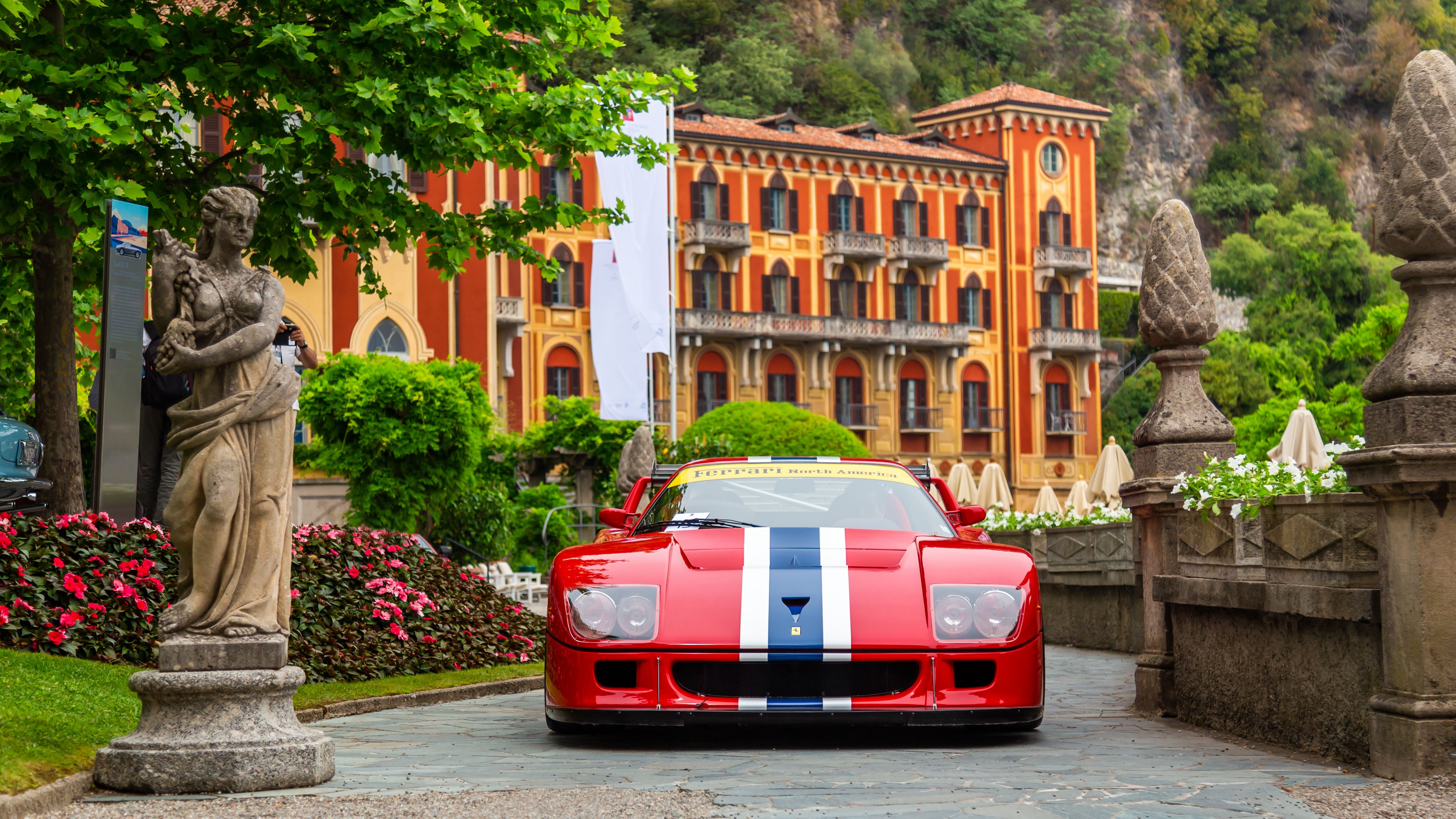
The Ferrari F40 was the last car Enzo Ferrari signed off before he died, and he made it the most stripped back Ferrari ever built. Anything that did not make it faster was left out. What remained was a twin turbo V8, a body you could see the weave through, and the first production car in history to pass 200 mph. There is a reason people still call it the greatest supercar ever made.
Enzo wanted one last statement
By 1987 Ferrari was 40 years old and Enzo was 88. He wanted to mark the anniversary with something that reminded everyone what the badge stood for. Not comfort. Not gadgets. Speed, and nothing in the way of it.
He got it. When the red sheet came off at the Civic Centre in Maranello, the room went quiet, then broke into applause. It was the last car Enzo Ferrari personally approved. He died the following year.
It was born from a dead race program
The F40 did not start as a birthday present. It started as a race car with nowhere to race. In the mid 1980s Ferrari built the 288 GTO to compete in Group B, the wild top tier of rallying. Then a string of fatal crashes made the sport pull the plug on Group B in 1986. Ferrari was left with five highly developed 288 GTO Evoluzione prototypes and no series to run them in.
Engineer Nicola Materazzi convinced Enzo not to waste them. Take that race car, he argued, and turn it into the hardest road car Ferrari had ever built. Working with Pininfarina on the body, the team went from idea to finished car in about thirteen months.
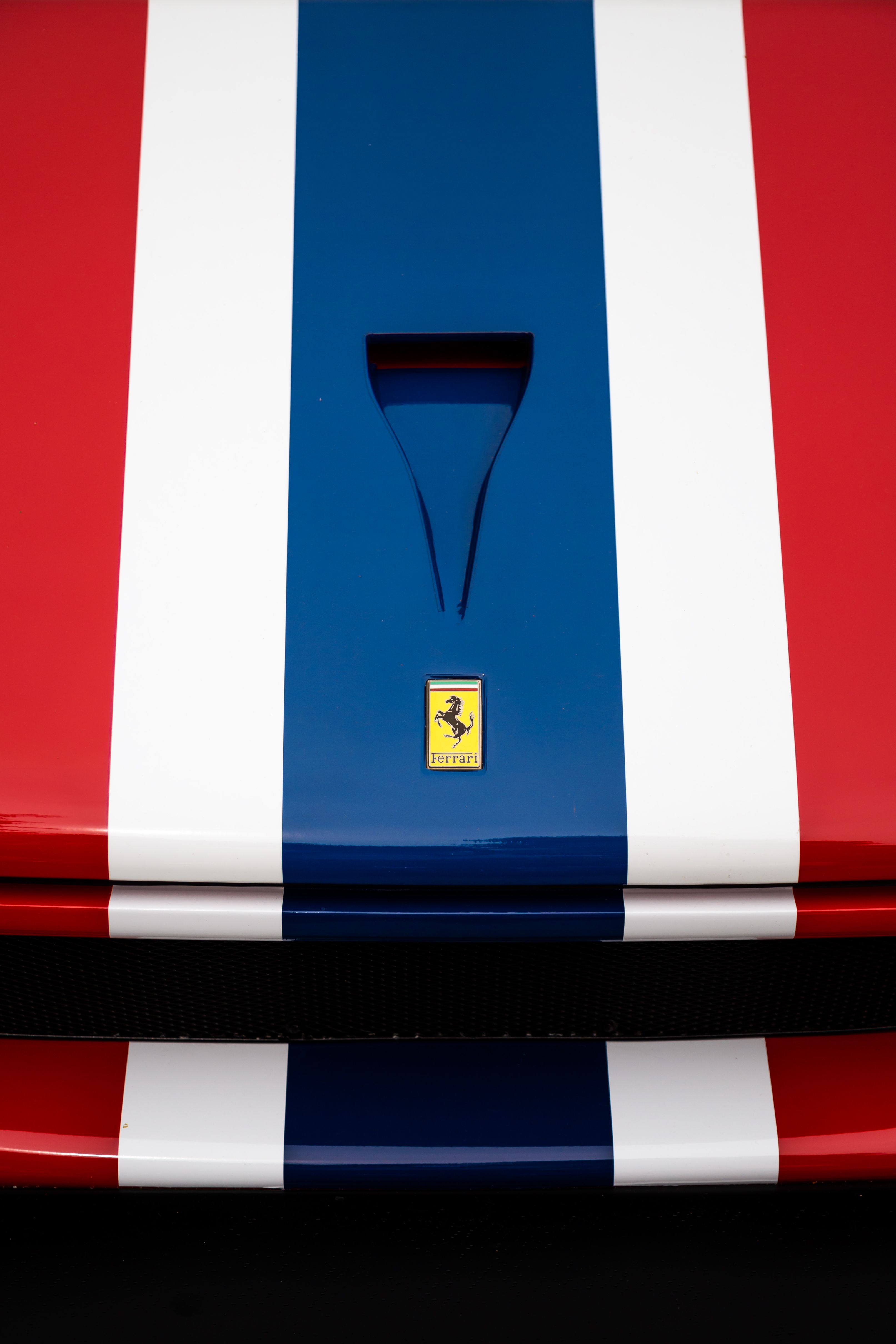
What engine the Ferrari F40 uses
Behind the driver sits a 2.9 liter twin turbocharged V8, developed from the 288 GTO engine. It makes around 471 horsepower at 7,000 rpm and 426 lb ft of torque. Those numbers do not sound wild today. The way they arrive is the point. Below 3,500 rpm the car feels almost calm. Then both turbos come on boost at once and it turns into something else entirely. It was also Ferrari's last turbocharged road car engine until the California T arrived in 2014.
The first road car to break 200 mph
Ferrari claimed a top speed of 201 mph. That made the F40 the first production car to officially pass the 200 mph mark. Zero to 60 mph came in a little over four seconds. The speed came from a hard rule the whole car followed. Add power, then take away everything that slows it down.
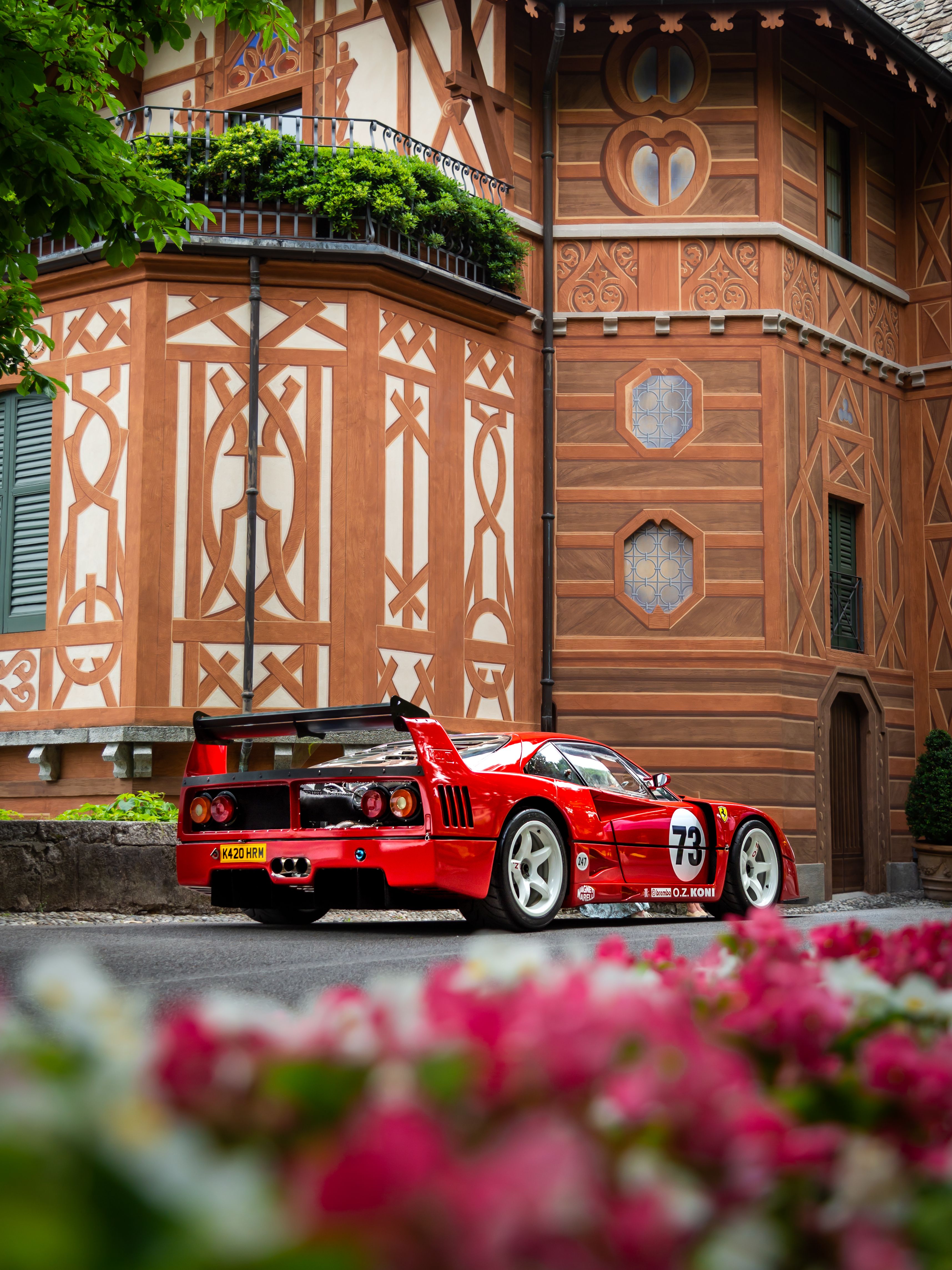
Built light, on purpose
The body is Kevlar, carbon fiber, and aluminum over a tubular steel frame. The windshield and windows are plastic. Even the paint was sprayed thin. Look closely at an early car and you can see the weave of the composite through it. Dry weight came in around 1,100 kilograms. That is featherweight for a supercar, then or now, and it is the real reason the F40 feels so alive.
Inside, there is almost nothing
Open the door with the pull cord, because there is no handle, and the cabin makes the whole idea obvious. No leather. No carpet. No sound system. Bare composite floor with the weave on show. Early cars had sliding plastic windows lifted straight from a race car. Air conditioning was the one concession, and only because the engine behind your head runs so hot.
It went racing after all
The road car was so close to a race car that turning it back into one took little work. Ferrari built the F40 LM, then the Competizione, then the GTE. An F40 LM finished third on its IMSA debut at Laguna Seca in 1989, driven by Jean Alesi, beating a field of purpose built specials. In the BPR Global GT Series the F40 took wins at Vallelunga and Anderstorp before the McLaren F1 GTR arrived and moved the game on.
What a Ferrari F40 is worth now
Ferrari planned to build 400. Demand and speculation pushed that to around 1,311 cars, with 213 sold in the United States. It listed at close to 400,000 dollars in 1987. Prices crashed when the early 1990s bubble burst, then climbed for decades. Good road cars now trade between roughly 2.5 million and 4 million dollars, with the best examples higher. The rare LM race cars are in another bracket, with one selling for about 11 million dollars in 2025.
Why the Ferrari F40 still matters
The F40 is the car people point to when they explain what a supercar felt like before computers softened the edges. No traction control to catch you. No screens. Nothing between your right foot and the road. Every Ferrari since has moved further from that idea, which is exactly why this one still holds the top spot for so many people. It was the last car Enzo approved, and he made sure it was the purest.